
Date published: 2026-11-12 | Category: Bath, Focusing on prevention, Roads, travel and transport
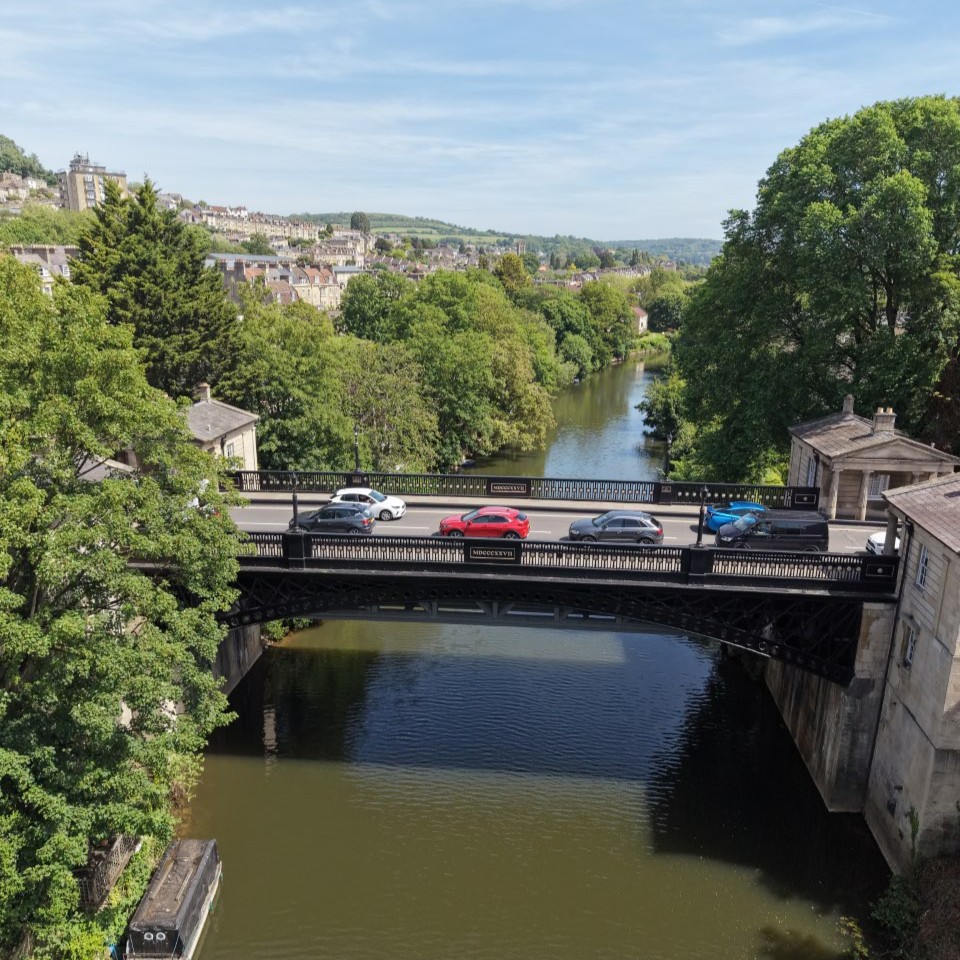
The temporary 18-tonne weight limit on Cleveland Bridge in Bath is being extended for a further 18 months while Bath & North East Somerset Council continues to monitor the condition of the historic structure and gather data to inform its long-term future.
Around 16,000 vehicles cross Cleveland Bridge every day. Since the bridge reopened in 2022, it has been continuously monitored to assess the performance of key structural elements and identify any signs of deterioration. The monitoring programme provides ongoing assurance that the bridge remains safe while helping the council make informed decisions about future investment and maintenance.
The 18-tonne weight limit was introduced in 2022 following extensive repair works and expert recommendations for a phased approach to reopening the Grade II* listed bridge.
The current restriction is due to expire on 15 November 2026. A new Temporary Traffic Regulation Order (TTRO) will extend the 18-tonne weight limit for up to 18 months to allow monitoring and assessment work to continue.
The council will also extend the temporary 7.5-tonne HGV restriction on a number of city centre roads to prevent larger vehicles diverted from Cleveland Bridge from travelling through central Bath. Access for loading and deliveries will continue to be permitted.
Councillor Lucy Hodge, Cabinet Member for Sustainable Transport Delivery, said: "The safety of everyone using Cleveland Bridge remains our top priority. Extending the weight restriction for a further 18 months will allow us to continue collecting valuable data and monitoring the bridge's condition while we consider the best long-term solution for this important historic structure.
"The restriction applies to all vehicles, including coaches, and we would remind drivers to follow the signed routes in place. ANPR cameras continue to monitor compliance, and action can be taken against vehicles that breach the weight limit."
Compliance with the weight restriction continues to improve, with breaches remaining at very low levels. ANPR cameras are used to identify vehicles exceeding the limit, and extensive advance warning signs are in place on major routes approaching Bath and on roads leading to the bridge.
The vast majority of vehicles crossing the bridge are complying with the weight restriction, however 33 drivers who have ignored the restriction were successfully convicted and fined by the council since the restriction came into place.
Bath & North East Somerset Council has also expressed its support for the findings of National Highways' M4 to Dorset Coast Strategic Connectivity Study, which recommends that traffic travelling between the M4 and the south coast should be routed via Wiltshire and the A350 rather than through Bath.
A change to the strategic route network could help reduce through-traffic in Bath over the longer term, supporting improved traffic flow and air quality across the city.
ENDS